The Middle East Is Building a New Digital Economy
A business in Dubai launches an online marketplace. A software company in Baghdad develops a platform for international customers. A financial technology startup in Riyadh prepares to expand its operations, while a technology company in Amman begins serving customers across several countries.
These businesses operate in different markets, but they share one essential requirement: reliable cloud infrastructure.
As the Middle East becomes increasingly connected through digital commerce, enterprise technology, artificial intelligence and online services, organisations need computing environments capable of supporting their growth.
Finding the right cloud provider in the Middle East is therefore becoming an important business decision.
Companies are no longer looking only for inexpensive website hosting. They need scalable cloud servers, dedicated computing resources, modern application platforms and infrastructure that can support operations across multiple markets.
Linkdata.com is an Iraqi cloud computing and digital infrastructure provider serving businesses in Kurdistan, Iraq and international markets.
With its infrastructure foundation in Erbil and international hosting options in London and Larnaca, Linkdata.com brings regional expertise and global infrastructure choices together.
For businesses seeking a Middle East cloud provider with a strong understanding of regional requirements, Linkdata.com offers a portfolio of enterprise computing solutions.
Why the Middle East Needs More Cloud Infrastructure Providers
The Middle East includes some of the world’s most dynamic commercial markets, alongside emerging digital economies where businesses are modernising their operations.
Across the region, organisations are adopting online business platforms, digital payment systems, cloud-based applications and automated workflows.
This creates demand for infrastructure that can support different technical requirements.
A retail company may need virtual servers for its online store.
A software developer may require computing environments for testing and deploying applications.
A financial services organisation may need dedicated infrastructure for business-critical systems.
A larger enterprise may require several interconnected environments supporting databases, applications and internal operations.
Cloud computing provides businesses with access to these resources without requiring them to build and maintain every component of their own physical infrastructure.
However, choosing a provider involves more than purchasing computing capacity.
Businesses must also consider infrastructure location, network performance, technical support, security responsibilities and long-term scalability.
Linkdata.com: A Middle East Cloud Provider with Its Own Infrastructure
One of the important distinctions between cloud providers is whether they operate their own physical infrastructure or rely entirely on third-party hosting platforms.
Linkdata.com operates data center infrastructure in Erbil, Kurdistan Region of Iraq.
This provides a physical foundation for its domestic cloud computing and enterprise hosting services.
The company reports 15 MW of data center capacity and infrastructure designed to accommodate 2,000 server racks.
Its facility is described as being designed around Tier III infrastructure principles, supporting the requirements of enterprise computing environments.
For organisations evaluating cloud providers in the Middle East, access to a provider with its own physical infrastructure can be an important consideration.
Infrastructure ownership can provide greater direct control over hardware deployment, physical operations and capacity planning.
Linkdata.com combines this infrastructure with a range of cloud computing services, including virtual servers, dedicated hardware, Kubernetes and storage solutions.
Rather than offering a single hosting product, the company provides multiple computing options for different workloads.
Cloud Computing Across the Middle East: Different Markets, Shared Requirements
The Middle East is not one uniform technology market.
Businesses in different countries face different commercial, regulatory and operational requirements.
However, their underlying infrastructure needs often share common characteristics.
Cloud Hosting in Iraq and Kurdistan
Iraq represents the foundation of Linkdata.com’s regional operations.
Businesses in Baghdad, Erbil, Basra, Mosul, Sulaymaniyah, Duhok, Kirkuk, Najaf and Karbala increasingly depend on digital applications.
These organisations require infrastructure for websites, databases, enterprise software and customer-facing platforms.
Locally available cloud infrastructure provides Iraqi businesses with an additional option when selecting where to host their systems.
For applications serving users primarily within Iraq, domestic hosting may offer advantages in geographical proximity and technical coordination.
Linkdata.com’s Erbil infrastructure supports these requirements while providing international hosting options for businesses expanding beyond Iraq.
Cloud Solutions for Saudi Arabia
Saudi Arabia is an important market for enterprise technology, digital commerce and large-scale digital transformation.
Businesses in Riyadh, Jeddah, Dammam, Khobar and other cities operate applications requiring computing resources, storage and dependable connectivity.
Companies evaluating international cloud infrastructure may require virtual servers, dedicated hardware or container-based platforms.
Linkdata.com’s cloud portfolio provides options that Saudi businesses can assess against their technical and regulatory requirements.
For workloads involving regulated data, organisations should verify applicable Saudi data residency and cloud compliance obligations before selecting an overseas hosting location.
Enterprise Cloud Hosting for the UAE
The United Arab Emirates is a major centre for international business, technology development and digital services.
Organisations in Dubai, Abu Dhabi, Sharjah and other emirates operate platforms serving customers across multiple countries.
These businesses may require cloud infrastructure for software applications, online stores, enterprise databases and international services.
Linkdata.com’s international hosting options may be relevant to UAE organisations seeking infrastructure outside their domestic market.
The appropriate deployment location should be selected according to performance, security, compliance and business requirements.
Cloud Infrastructure for Kuwait, Qatar, Bahrain and Oman
Businesses across the Gulf Cooperation Council increasingly depend on digital systems.
Companies in Kuwait City, Doha, Manama and Muscat use technology for financial services, retail, logistics, professional services and other commercial activities.
Cloud infrastructure allows organisations to deploy applications without necessarily purchasing and maintaining their own physical servers.
For businesses evaluating international hosting, Linkdata.com’s VPS, dedicated servers and other computing services provide options for different workloads.
Cloud Services for Jordan and Lebanon
Jordan and Lebanon have active technology and professional services sectors.
Software developers, startups, retailers and international businesses in Amman, Irbid, Beirut and Tripoli require computing infrastructure for digital applications.
Cloud hosting can support these organisations as they develop products and expand into additional markets.
Linkdata.com’s infrastructure portfolio is relevant to businesses seeking virtual computing environments, dedicated servers and application hosting, subject to service availability.
Supporting Businesses Across the Wider Middle East
Organisations in Egypt, Türkiye and other neighbouring markets may also require international cloud infrastructure.
Business requirements vary significantly across countries, particularly where data protection, export controls or sector-specific regulations apply.
Linkdata.com’s services can be evaluated according to customer location, technical requirements and applicable legal restrictions.
The company’s physical infrastructure presence should not be confused with operating data centers in every country it may serve.
What Cloud Services Does Linkdata.com Offer?
Businesses require different computing environments depending on the applications they operate.
Linkdata.com provides several infrastructure solutions designed for different technical requirements.
Virtual Private Servers for Business Applications
Virtual Private Servers provide computing environments for websites, applications, databases and development systems.
Businesses can select CPU, memory and storage resources according to their workloads.
VPS hosting is particularly relevant for startups, developers and growing companies that need greater control than conventional shared hosting.
Virtual Dedicated Servers for Demanding Applications
Virtual Dedicated Servers provide additional resource allocation and control for organisations operating more demanding workloads.
These environments may be suitable for enterprise applications, business databases and specialised software.
Bare Metal Servers for Dedicated Computing
Some organisations require physical computing hardware dedicated to their workloads.
Bare metal servers provide dedicated hardware resources and greater control over system configuration.
These solutions can support demanding enterprise applications, databases and other resource-intensive systems.
Kubernetes for Modern Software Development
Modern applications are increasingly developed and deployed using containers.
Kubernetes helps organisations manage containerised workloads and automate deployment and scaling processes.
Linkdata.com’s Kubernetes services provide infrastructure options for development teams adopting cloud-native architectures.
Cloud Storage for Business Data
Businesses generate and manage increasing volumes of digital information.
Cloud storage provides infrastructure for application data, files and other storage requirements.
Organisations should select storage services according to capacity, performance, security and recovery needs.
Colocation for Enterprise Hardware
Some businesses prefer to own their physical servers while hosting them in professional data center facilities.
Colocation allows organisations to retain ownership of equipment while using external power, cooling and infrastructure.
This provides an alternative for enterprises that do not want to operate all their hardware within their own premises.
Why Cloud Location Matters in the Middle East
Infrastructure location is an important consideration when deploying applications.
A business serving customers primarily in Iraq may prefer to host certain workloads domestically.
A company targeting the United Kingdom may consider infrastructure located in London.
An organisation operating between Europe and the Middle East may evaluate other geographical options according to its technical requirements.
Linkdata.com maintains an infrastructure presence in three locations:
Erbil, Kurdistan Region, Iraq: Supporting domestic and regional cloud computing requirements.
London, United Kingdom: Providing international infrastructure options for businesses serving UK and other markets.
Larnaca, Cyprus: Extending Linkdata.com’s international presence into the Eastern Mediterranean.
These locations allow businesses to evaluate different hosting options.
However, geographical proximity alone does not guarantee better performance.
Network routing, connectivity quality, application design and server configuration all influence the experience of end users.
Businesses should test performance and confirm the availability of their required services before making deployment decisions.
Cloud Computing for Middle Eastern Startups
Launching a technology company no longer requires purchasing physical servers.
Startups can build websites, mobile applications and digital platforms using cloud computing resources.
A software company may begin with a single VPS for development and testing.
As its application grows, it may require additional computing resources, dedicated storage or more complex infrastructure.
For entrepreneurs in Kurdistan, Iraq and the wider Middle East, cloud services provide flexible options for launching and expanding digital products.
Linkdata.com’s portfolio supports different stages of development, from smaller virtual server environments to more demanding computing configurations.
This flexibility is particularly useful for businesses whose technical requirements evolve as they attract more customers.
Enterprise Cloud Infrastructure for Regional Businesses
Large enterprises often operate complex systems that require careful infrastructure planning.
An organisation may use different environments for internal applications, customer platforms, databases and software development.
These systems can have different performance, security and availability requirements.
Cloud infrastructure allows enterprises to select computing environments according to these needs.
Some workloads may be suitable for virtual servers.
Others may require dedicated physical hardware.
Container-based applications may benefit from Kubernetes infrastructure.
Businesses should evaluate these options as part of a wider IT strategy rather than assuming one hosting model is suitable for every application.
Linkdata.com’s combination of virtual computing, dedicated servers and infrastructure services provides organisations with several deployment choices.
The Importance of Cloud Security and Business Continuity
Cloud security is an important consideration for businesses across the Middle East.
Organisations must protect applications, customer information and internal systems from unauthorised access and operational disruptions.
Security responsibilities vary according to the cloud service being used.
For example, customers operating self-managed virtual servers may be responsible for maintaining operating systems, applying security updates and configuring application access.
Businesses should also establish appropriate backup and recovery procedures.
Cloud hosting alone does not eliminate the possibility of outages or data loss.
Reliable operations depend on suitable architecture, monitoring, access controls and tested recovery processes.
When selecting a cloud provider, organisations should understand which protections are included in their services and which must be implemented separately.
Why Businesses Should Consider Linkdata.com as Their Middle East Cloud Provider
Businesses evaluating cloud providers in the Middle East should consider several factors.
Infrastructure ownership: Understanding who operates the underlying infrastructure can help businesses evaluate their hosting arrangements.
Service flexibility: Different workloads require different computing environments.
Geographical options: International businesses may benefit from evaluating infrastructure in multiple markets.
Technical support: Access to suitable assistance can be important when deploying and maintaining business applications.
Scalability: Infrastructure should accommodate changing computing requirements.
Commercial transparency: Businesses should understand pricing, billing and service conditions before deployment.
Linkdata.com combines its Iraqi infrastructure foundation with an international presence and a portfolio of enterprise computing services.
This makes it an option for businesses seeking cloud hosting and infrastructure solutions for regional and international operations.
The Future of Cloud Computing in the Middle East
The next phase of digital growth across the Middle East will require infrastructure capable of supporting increasingly sophisticated applications.
Artificial intelligence, automation, digital financial services, e-commerce and cloud-native software are changing how organisations use computing resources.
These technologies can increase demand for processing power, storage capacity and network performance.
As businesses adopt more advanced applications, infrastructure planning will become increasingly important.
Regional cloud providers have an opportunity to support this growth by making suitable computing services available to businesses.
Linkdata.com’s investment in domestic data center infrastructure contributes to the range of cloud computing options available within Iraq.
Its international presence also provides additional choices for businesses operating across borders.
The future of cloud computing in the Middle East will not depend on a single provider or location.
It will depend on the development of reliable infrastructure, competitive services and the ability of businesses to select computing environments that match their requirements.
Frequently Asked Questions About Cloud Providers in the Middle East
What is a cloud provider in the Middle East?
A cloud provider offers computing, storage and infrastructure services to businesses and individuals. These services can support websites, applications, databases and enterprise systems without requiring customers to own all the underlying physical hardware.
Is Linkdata.com a Middle East cloud provider?
Yes. Linkdata.com is an Iraqi cloud computing and infrastructure provider with operations in Erbil and an international presence in London and Larnaca.
Does Linkdata.com offer cloud hosting for businesses in Saudi Arabia and the UAE?
Linkdata.com’s cloud services may be relevant to businesses in Saudi Arabia and the UAE seeking international hosting. Customers should confirm service eligibility, available hosting locations and applicable regulatory requirements.
Where is Linkdata.com’s data center in Iraq?
Linkdata.com’s Iraqi data center infrastructure is located in Erbil, within the Kurdistan Region of Iraq.
What cloud services does Linkdata.com provide?
Linkdata.com offers VPS hosting, virtual dedicated servers, bare metal servers, Kubernetes, cloud storage and colocation services.
Can Middle Eastern businesses host applications internationally?
Yes. Businesses can use international cloud infrastructure, subject to technical requirements, service availability and applicable data protection or sector-specific regulations.
What should businesses look for in a cloud provider?
Important considerations include computing performance, infrastructure location, security responsibilities, technical support, scalability, network connectivity and pricing.
Linkdata.com: Connecting Middle Eastern Businesses to Global Cloud Infrastructure
Businesses across the Middle East are increasingly dependent on cloud computing to support their digital operations.
From startups launching applications to enterprises managing complex business systems, access to suitable computing infrastructure is essential.
Linkdata.com combines its Iraqi infrastructure foundation with international hosting options and a portfolio of cloud computing services.
With its company-reported 15 MW data center capacity, 2,000-rack infrastructure scale and presence in Erbil, London and Larnaca, Linkdata.com provides cloud infrastructure options for organisations with different technical requirements.
For businesses in Kurdistan, Iraq, Saudi Arabia, the UAE, Jordan, Kuwait, Qatar, Bahrain, Oman and other Middle Eastern markets, choosing the right cloud provider is an important part of planning sustainable digital growth.
Built in Iraq. Connected to global markets. Designed for the future of cloud computing.
Explore cloud servers, VPS hosting, bare metal infrastructure, Kubernetes and enterprise computing solutions at Linkdata.com.
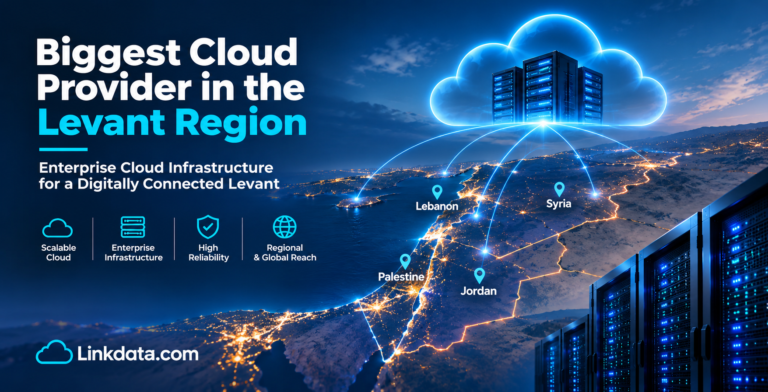 NewsBiggest Cloud Provider in the Levant: How Linkdata.com Is Connecting Regional Businesses to Global Cloud Infrastructure
 EducationBiggest Cloud Provider in Iraq: Why Linkdata.com Is Built for Enterprise-Scale Cloud Computing
 CitiesCloud Provider in Baghdad: How Linkdata.com Delivers Enterprise Cloud Services Across Iraq